A pollinator garden is not a collection of showy annuals. It is not a wildflower seed packet scattered across bare soil. It is not a butterfly bush in the corner of the yard.
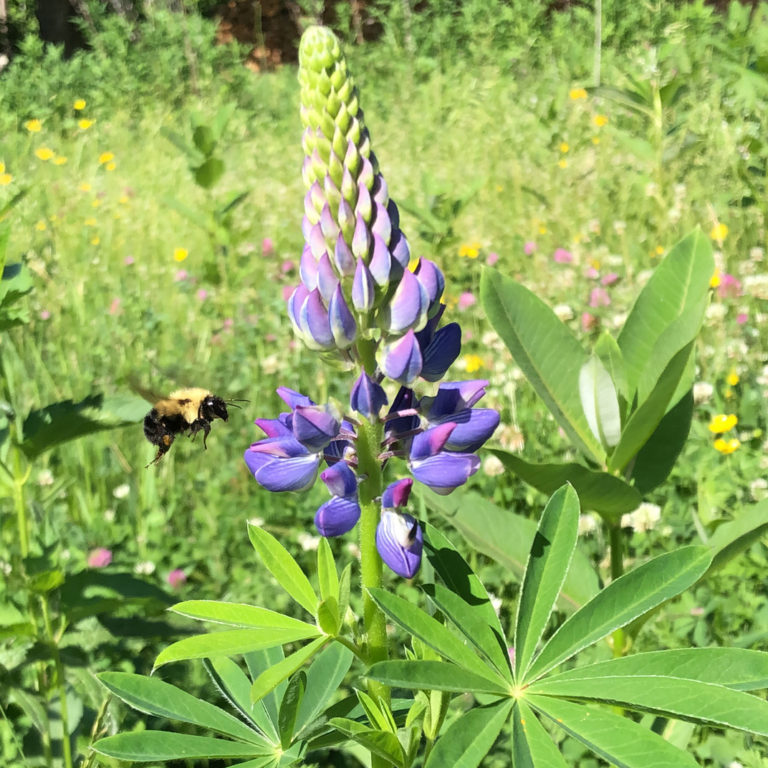
A designed pollinator garden is a plant community; one built around the specific relationships between native plants and the insects that evolved alongside them. In New Hampshire, that means thinking past honeybees and monarchs to the 400-plus species of native bees that live and breed here, most of them solitary, most of them dependent on specific plants.
Why native plants
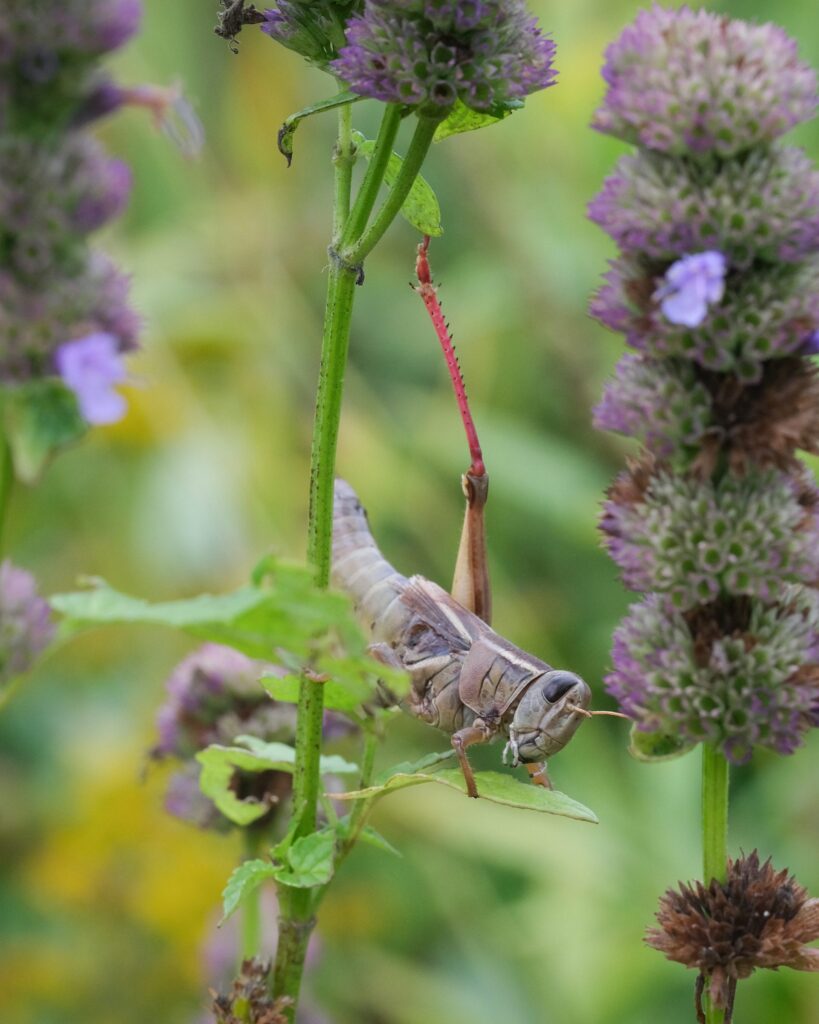
The relationship between native plants and native insects is not interchangeable. Specialist bees, including a number of species native to New Hampshire, can only collect pollen from specific plant genera. Generalist bees are more flexible, but they still prefer native plants, which tend to offer more nutritionally complete pollen than ornamentals bred for appearance over function.
Research by Doug Tallamy at the University of Delaware has documented this across the food web: native oaks support over 500 species of caterpillars; non-native ornamentals support close to none. The food web runs through native plants. A garden built primarily on exotics is ecologically quiet.
What to plant
The most important thing is bloom succession, or making sure something is flowering from early spring through late fall. Native bees emerge on different schedules. Queen bumblebees come out in March and April, when little else is flying. Many specialist bees emerge in late summer, timed to specific plants.
Anchor species for New Hampshire pollinator gardens, by season:
Spring:
Baptisia (wild indigo), Geranium maculatum (wild geranium), Zizia aurea (golden alexanders)
Summer:
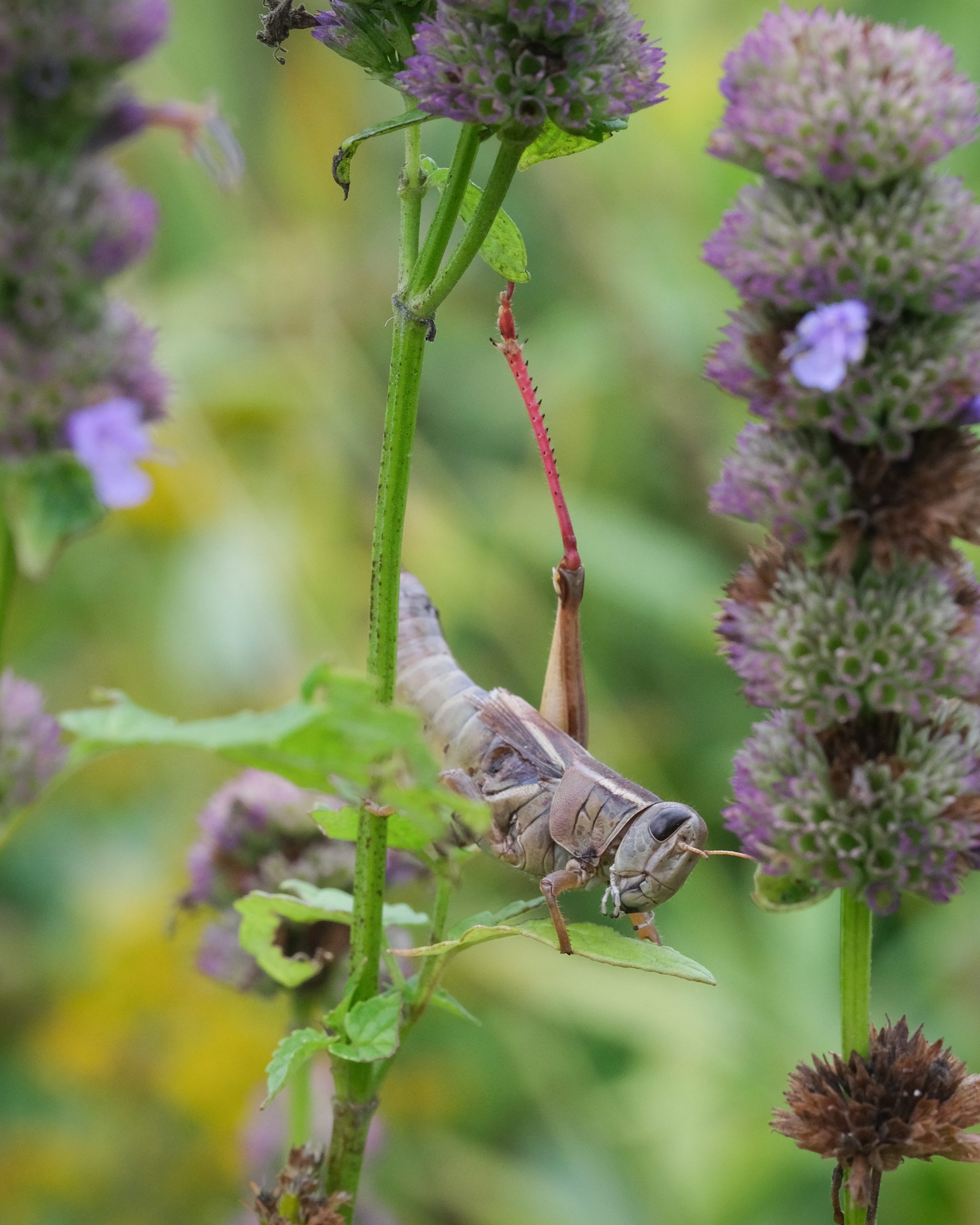
Monarda (bee balm), Echinacea purpurea (purple coneflower), Pycnanthemum (mountain mint — arguably the single best pollinator plant per square foot in New England)
Fall:
Symphyotrichum (native asters), Solidago (goldenrod, which blooms at the same time as ragweed but is not what causes allergies), Rudbeckia (black-eyed Susan)
The goal is not to create a list and plant it. The goal is to design a legible, continuous bloom sequence across the full season — a plant community, not a collection.
Structure and design
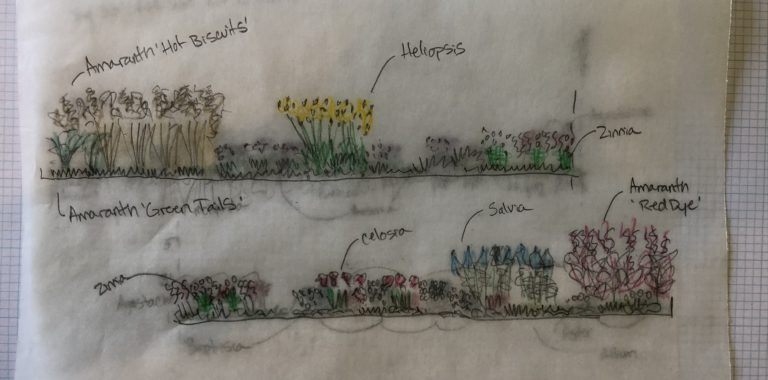
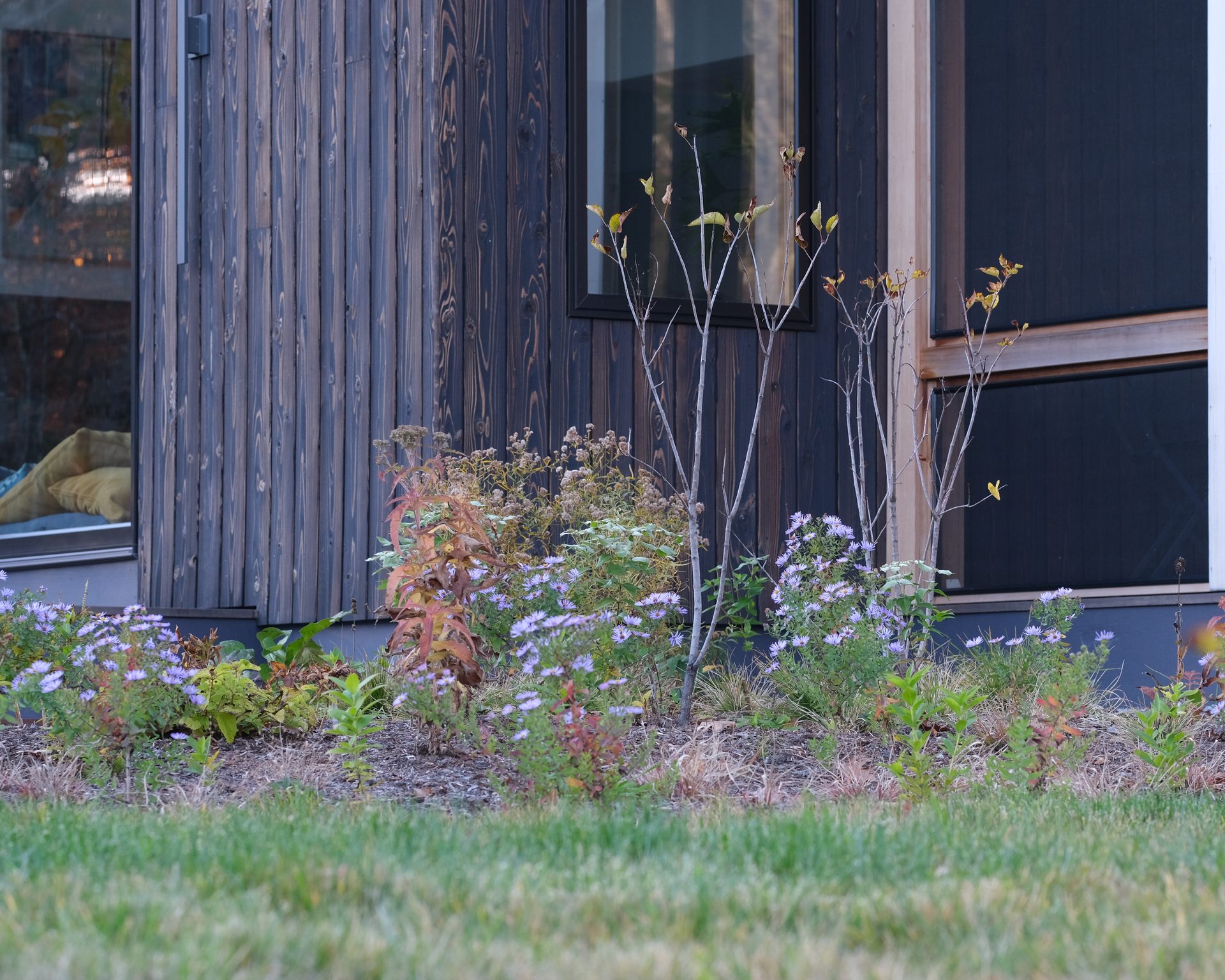
A pollinator garden should be designed, not just planted. That means thinking about bloom succession across the season, height layering so taller plants anchor the back and lower plants hold the edges, and density close enough that the planting reads as a community rather than isolated specimens.
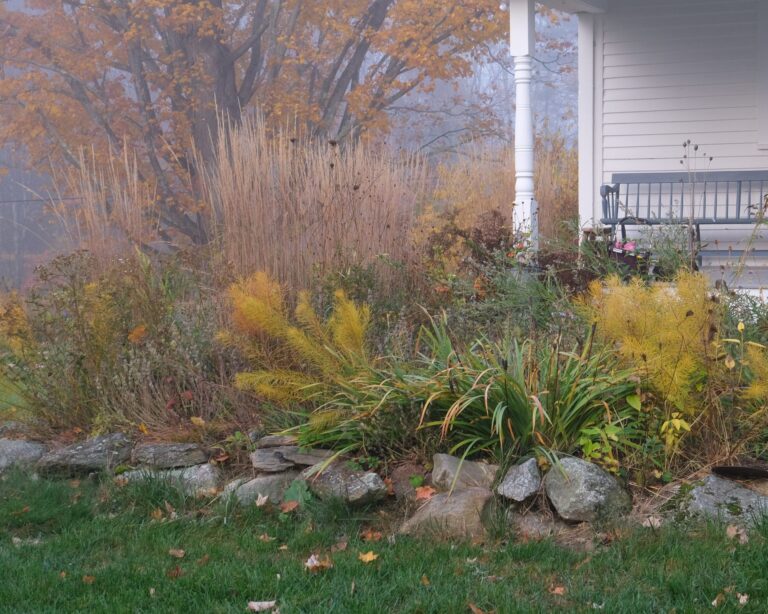
It also means thinking about winter. Seedheads and dried stems are not just visually interesting through November and December — they are overwintering habitat for the insects the garden is designed to support. Native bees nest in hollow and pithy stems. Ground beetles and parasitic wasps shelter in leaf litter at the base of plants. A hard cleanup in fall removes all of that before it has served its purpose.
The best pollinator gardens are also beautiful. They do not look like neglect. They look like intention. Matrix planting — designing with species communities rather than individual plants — is one approach that tends to produce both ecological density and visual coherence.
What to expect
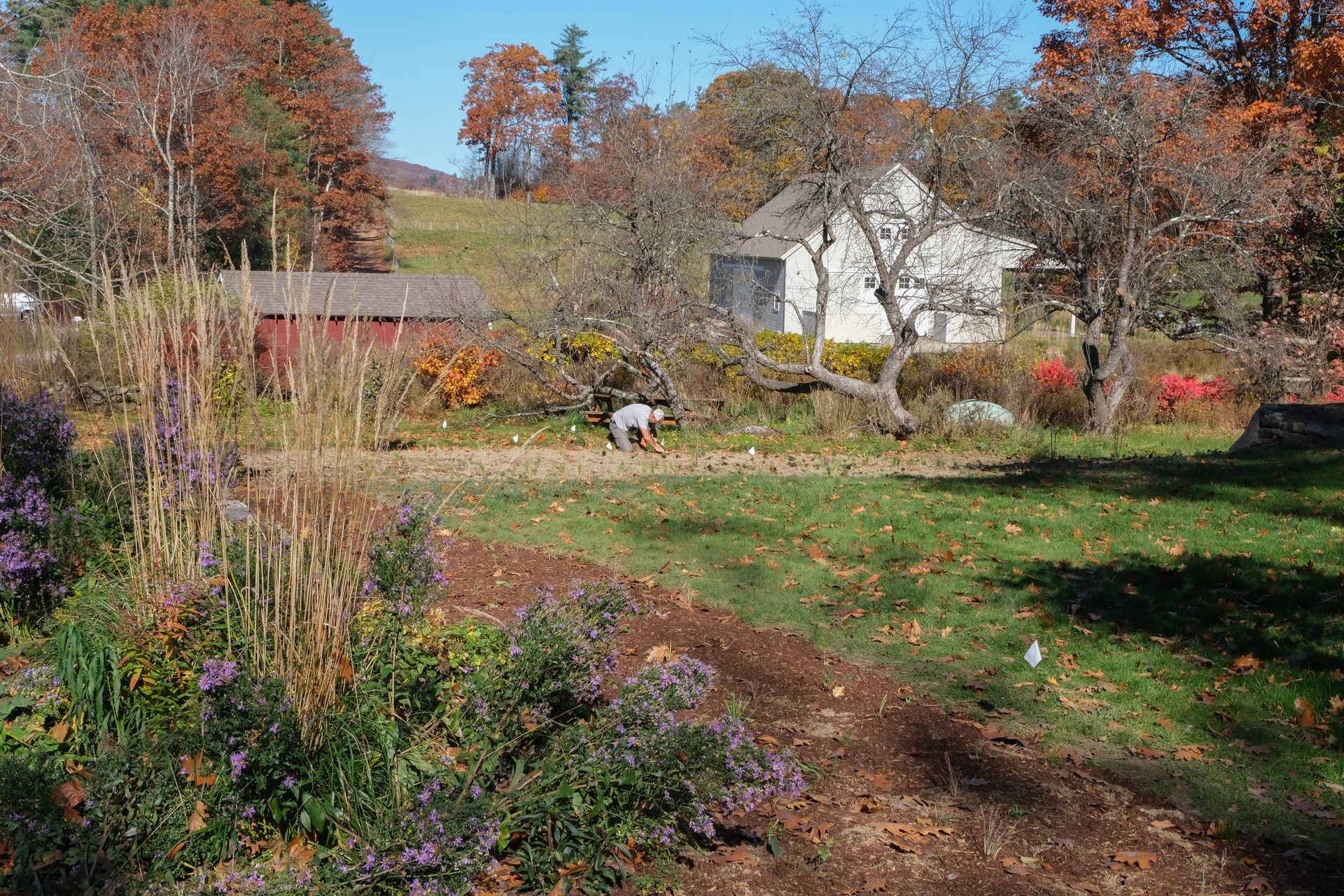
In southern New Hampshire, an ecological garden designed for pollinators will look different in each season. Spring blooms are dominated by trees, shrubs, and bulbs. At this stage, perennials are mostly foliage. Summer is peak bloom and activity. Fall is when perennials are at their tallest and most billowy: asters, grasses, seedheads, the last of the rudbeckia.
If you are building a pollinator garden from scratch, plan for a three-year establishment period. The first year is root development, most of the growth is happening underground. The second year, you will start to see the plant community take shape. By year three, the garden begins to function.
The investment is front-loaded. The return compounds.
Photography: Elise Sullivan